
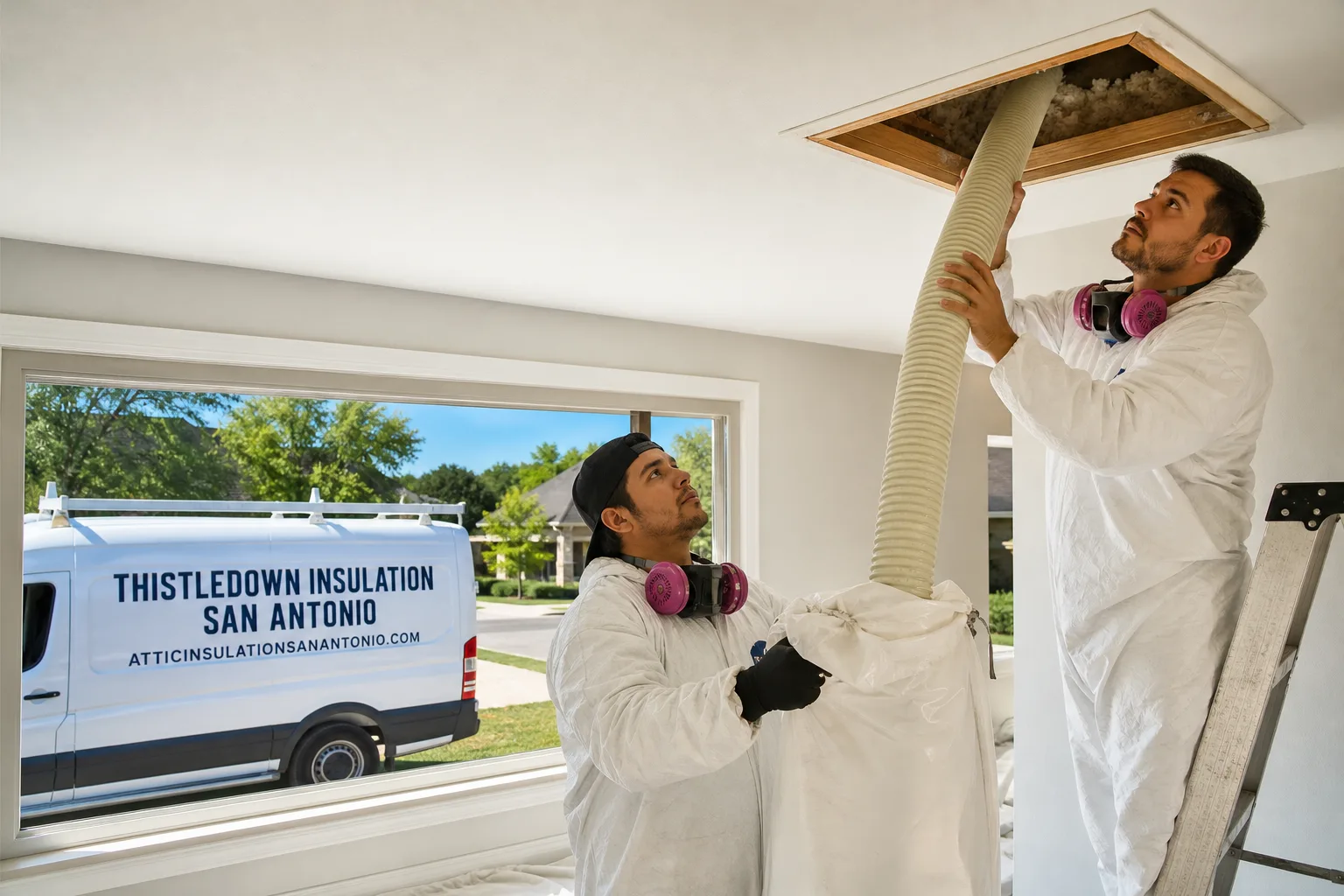
How Much Does Attic Air Sealing Cost in San Antonio?
Attic air sealing in San Antonio typically costs between $1,200 and $2,800 for a standard single-family home, with most homeowners paying around $1,900. The work usually takes one full day for a two-person crew. Your exact price depends on attic accessibility, square footage, and how many bypasses need sealing, but you’ll have a written number before any work begins.
Attic Air Sealing Cost Breakdown (2026)
Here’s what the numbers actually look like across the San Antonio market this year. These ranges reflect typical homes in Alamo Heights, Stone Oak, Helotes, Converse, and the broader Bexar County area.
| Line Item | Typical Cost Range | Notes |
|---|---|---|
| Energy audit / blower door test (pre-sealing) | $150 – $400 | Often credited toward the job if you proceed |
| Air sealing labor (per sq ft of attic floor) | $0.80 – $1.60 | Includes foam, caulk, weatherstripping materials |
| Whole-attic sealing, 1,500 – 2,500 sq ft home | $1,200 – $2,800 | Most common San Antonio project |
| Attic hatch sealing and weatherstripping | $100 – $250 | Includes hatch lid insulation |
| Recessed can light covers (per fixture) | $15 – $35 | IC-rated airtight covers for older cans |
| Furnace flue / chimney chase sealing | $75 – $200 | High-temp caulk around metal flue |
| Duct boot sealing (per register) | $20 – $45 | Seals gap where duct meets ceiling drywall |
| Knee wall / drop ceiling air barrier | $400 – $900 | Common in two-story San Antonio homes with bonus rooms |
| Blown-in insulation replacement (if existing is compressed or dirty) | $1,500 – $3,500 | Often paired with air sealing for best results |
A 1,000-square-foot ranch in Converse will land on the lower end. A 3,200-square-foot two-story in Stone Oak with multiple soffit penetrations, a bonus room over the garage, and old can lights will push past $2,500. The difference isn’t mystery, it’s how many bypasses the crew actually has to find and seal.
What Affects Attic Air Sealing Pricing in San Antonio
San Antonio’s climate and housing stock shape the cost more than most people realize. Here are the factors that move the quote up or down.
- Attic accessibility. Older San Antonio homes, especially 1960s – 1980s builds in neighborhoods like Castle Hills and Northwood, often have low-slope roofs with tight attic clearances. If a technician can’t stand comfortably, the job takes longer and costs more than a wide-open trussed attic in a newer Cibolo build.
- Number of penetrations. Every ceiling light fixture, ceiling fan, vent pipe, and wire chase in the top floor is a bypass. A 1970s home with 14 can lights and three bathroom fans might need 40-plus individual sealing points. A newer home with eight recessed LEDs and sealed boxes needs far fewer.
- Existing insulation condition. If the current insulation is compressed, rodent-damaged, or saturated from a past roof leak, it has to be removed before sealing begins. Removal and disposal adds $1 to $2 per square foot, and in San Antonio’s humid summers, moldy insulation is more common than homeowners expect.
- Ductwork location. Many San Antonio homes run ducts through unconditioned attics. Sealing around duct boots, returns, and plenums is extra work, but it’s also where a big share of the air leakage lives. In July, that attic hits 130°F, and every unsealed joint pulls conditioned air into the heat.
- Two-story and bonus-room geometry. Knee walls and drop ceilings over garages are leak-prone construction details. Sealing those spaces properly requires more foam, more patience, and more time on the job.
- Whether insulation is being upgraded at the same time. Air sealing alone is worthwhile, but pairing it with new blown-in insulation during the same visit costs less than doing them separately. You’re already paying for the crew, the truck, and the prep. Combining the two is the most common project Thistledown quotes for San Antonio families.
Why San Antonio Attics Leak More Than You’d Think
San Antonio sits at the edge of two climate zones, and the summers test every seal. From June through September, attic temperatures routinely reach 130°F to 140°F while the living space below sits at 74°F. That temperature difference creates a strong stack effect: hot air pushes down through every gap in your ceiling, pulling your conditioned air up and out.
This is not the same problem a family in Minnesota has. Their winter stack effect works the other direction. In San Antonio, the leakage happens hardest during the exact months your AC is already running nonstop. Air sealing closes those gaps so the cooled air stays where you paid to put it.
What Actually Gets Sealed (Specifics Matter)
When we quote an attic air sealing project in San Antonio, here’s the list a homeowner should expect to see. If a quote just says “seal attic,” ask what’s on the list.
- Top plates. The gap where interior walls meet the attic floor, usually 1/4″ to 1/2″ wide and running along every interior wall. This is often the single biggest cumulative leak in a San Antonio attic.
- Wiring penetrations. Every wire drilled through a top plate gets foam-sealed. A typical home has 30 to 60 of these.
- Plumbing vents and chase ways. The open cavity around a PVC vent stack can be a 1″ gap running from the ceiling to the roof. Foam seals it from above.
- Recessed lighting. Older non-IC can lights leak both air and heat. We install airtight, fire-rated covers over them and seal the rim.
- The attic hatch. A surprising number of San Antonio homes have a thin piece of drywall sitting on a frame with zero weatherstripping. We seal the frame, weatherstrip the edges, and install an insulated cover on top.
- Flue and chimney chases. High-temperature caulk around the metal flue, never foam that could melt or off-gas near heat.
- Crown molding and dropped soffits over kitchen cabinets. These are invisible from the attic side and rarely sealed during construction. A thermal camera finds them fast.
- Bathroom fan vents. If the fan duct doesn’t terminate outside properly, it dumps humid air into the attic. We seal and re-route where needed.
The crews at Attic Air Sealing in San Antonio bring a thermal imaging camera on every estimate. It makes bypasses visible in minutes, which means the written price you get reflects what’s actually there, not a guess.
How to Save on Attic Air Sealing
There are honest ways to keep this project affordable without cutting corners that will cost you later.
- Combine air sealing with insulation replacement. If your blown-in insulation is 15-plus years old (or was installed to 1990s depth), doing both in one visit saves on labor, trip fees, and prep time. You’ll also qualify for better overall performance, because sealing first then insulating is the correct order.
- Ask about CPS Energy rebates. CPS Energy has offered rebates for attic insulation and sometimes for air sealing when done as part of an efficiency project. Requirements change, and a local contractor who does this daily will know what’s currently available and whether your project qualifies.
- Schedule during the shoulder season. March through early May and October through November are slower months for attic work in San Antonio. You may get more scheduling flexibility, and crews aren’t racing to finish before the next heat wave.
- Get the free estimate first. Every Thistledown estimate includes the thermal camera walkthrough at no charge. Call (903) 437-9164 and you’ll have a written number the same day, not a vague range.
- Don’t skip the small stuff to save $200. Leaving the attic hatch unsealed or half the top plates open because they were “good enough” means you’ll pay more on every single electric bill afterward. The point of this project is closing the gaps, not most of the gaps.
What San Antonio Homeowners Often Ask Before Hiring
Does air sealing actually lower electric bills here?
Yes, and the effect is measurable in San Antonio’s cooling season. CPS Energy data shows attic improvements can reduce cooling load by 10 – 15% in typical homes. When we seal a 1970s attic in Thousand Oaks that was leaking through 60-plus penetrations, homeowners generally notice the AC cycling less within the first billing period. Pairing sealing with insulation at the right depth (R-38 to R-49 for our climate zone) compounds the effect.
How do I know my attic needs air sealing?
If your upstairs rooms run 5 – 8°F warmer than downstairs in July, your AC runs constantly on 100°F days, or you feel drafts near ceiling fixtures, the attic is a likely culprit. Another tell: if the snow melts fast over your house’s roof edge while the neighbor’s holds (for the rare San Antonio freeze), heat is escaping through the attic. A thermal camera confirms it in about 20 minutes.
Is attic air sealing messy?
It can be, but it shouldn’t leave a mess in your home. We lay drop cloths across the hallway from the front door to the attic hatch, wear shoe covers indoors, and vacuum the hatch area when the work is done. Before the crew leaves, you get a photo of the cleaned-up workspace. Sealing itself is foam, caulk, and weatherstripping, not demolition.
How long does the work take?
A standard single-story San Antonio home takes one full day. Two-story homes with knee walls or bonus rooms can run a day and a half. Attics are hottest in the afternoon, so crews start early in summer months and often finish before the peak heat.
Can air sealing cause my attic to get too hot or trap moisture?
Air sealing should be paired with proper attic ventilation, and that’s part of how we evaluate your attic. San Antonio homes often have inadequate ridge or soffit venting, which is already stressing the roof deck. If we find ventilation gaps, we note them in your written estimate. The right combination is a sealed ceiling plane and a ventilated attic above it. That’s the actual building science, and it’s what keeps humidity from collecting in your insulation.
Should I replace my insulation at the same time?
If your existing insulation is level with or below the top of your ceiling joists, it’s well under the recommended depth for San Antonio. Sealing over old, compressed insulation doesn’t fix the bigger problem. In most homes we quote, sealing and insulation replacement are done together, and it’s the best dollar-for-dollar improvement a homeowner can make to this part of the house.
Is It Cheaper to Air Seal or Replace Insulation?
Air sealing alone is generally cheaper, but the two solve different problems. Sealing stops air movement. Insulation slows heat transfer. If your attic has good insulation depth but high air leakage, sealing alone is the right call and will run $1,200 – $2,800. If insulation is old, compressed, or thin, you need both. And if you do both in one visit, the combined cost typically falls between $2,500 and $5,500 for a standard San Antonio home. Get the foam work and the insulation from one crew, and you’ll get a better result than hiring them separately.
What You Should See on Your Written Estimate
Every homeowner should know what a real estimate includes before writing a check. A proper San Antonio attic air sealing quote from Thistledown includes:
- The square footage of attic floor being sealed
- A list of penetrations the crew found (top plates, can lights, plumbing vents, etc.)
- Material type (closed-cell one-part foam, high-temp caulk, weatherstripping)
- Air sealing labor, separate from insulation labor
- Insulation R-value and material, if being replaced
- Total price, written, before any work begins
- Our 365-Day Done Right Promise: if it’s not done right, we make it right
If a contractor won’t put the number in writing, or the line items disappear into a single vague “sealing” entry, ask questions. The work happens above your children’s bedrooms. You should know exactly what’s being done, with what product, at what price.
FAQs – Attic Air Sealing Cost
How much does attic air sealing cost in San Antonio?
It typically runs $1,200 to $2,800 for a standard single-family home, with the average landing around $1,900. For larger two-story homes or those needing extensive penetration sealing, it can reach $3,500. Your exact number is set in writing before the first can of foam gets opened. Call (903) 437-9164 for a free estimate with a thermal camera walkthrough.
Is attic air sealing worth the cost?
For most San Antonio homeowners, yes. Sealing costs $0.80 to $1.60 per square foot of attic floor and typically pays back in lower cooling costs within 3 – 5 years, especially in older homes with above-average leakage. The real payoff is comfort: rooms that hold temperature, less dust migration, and an AC that doesn’t run nonstop from June through September.
How much does it cost to seal an attic hatch?
Attic hatch sealing alone runs $100 to $250, including weatherstripping the frame, adding an insulated lid cover, and sealing the trim. It’s one of the highest-return single fixes in the whole attic, and it’s often the first place a homeowner sees a difference.
How much does sealing recessed can lights cost?
Each recessed can light cover runs $15 to $35 installed, depending on access and whether the fixture is IC-rated. A home with 10 old can lights typically adds $150 to $350 to the sealing quote, and in a San Antonio attic it’s one of the most cost-effective penetrations to close.
Can I get a rebate for attic air sealing in San Antonio?
CPS Energy has offered efficiency rebates covering attic insulation and sometimes associated air sealing, but program terms shift. A local contractor who files these regularly can confirm what’s current and whether your project qualifies. Free to ask, and it’s a fair question to bring up on the estimate call.
How fast can you start?
After your estimate, most San Antonio projects can be scheduled within 5 – 10 business days, with earlier slots sometimes available in spring and fall. Calls to (903) 437-9164 are answered by a live person 24/7, including weekends, so you can get a real answer tonight, not a callback.
Who We Are
Thistledown Insulation San Antonio is an independently owned Cedarwell-family company, founded in 2003. We install attic and spray foam insulation using eight product brands: Owens Corning, Johns Manville, Knauf, Rockwool, CertainTeed, Icynene, Demilec, and GreenFiber. That range matters because every attic and every family is different. Where a choice exists, we offer pet-safe products so the dog can stay home during the job.
The name comes from the thistle plant, whose soft fluff is one of nature’s lightest insulators. It’s a nod to how carefully we approach the work, and it’s a standard our crews carry onto every job. Shoe covers from the front door to the attic hatch. Drop cloths across the hallway. Quiet tools when children are sleeping. A photo of the clean-up before we leave.
We are led by Neil Barron, who built this company on a simple set of rules: Clean up like it’s our own home. Ask before we move or touch anything. Respect the family’s time and quiet hours. And explain the price before the work begins, every single time.
Your written estimate is free, and it comes with a thermal camera walkthrough. Call (903) 437-9164 to schedule yours.
Pricing reflects the San Antonio market as of 2026. Thistledown Insulation San Antonio offers free estimates – call (903) 437-9164.
Written by Neil Barron, Owner at Thistledown Insulation San Antonio, serving San Antonio since 2003.
What Our Customers Say
"Attic insulation with a newborn in the house. The crew was quiet, laid protection on every floor they crossed, and hauled off all the old material. Left it spotless and the house is cozier already."
- Corinne Dyer"Removed the old flattened insulation and blew in new. They were so careful not to track anything through the house, booties on, drop cloths down. Cleaned up spotless after."
- Kelvin Osei"Careful and clean from start to finish. They covered the hallway, wore booties, and hauled off all the old material without leaving a speck. Respectful of the home the whole time."
- Brett Yamamoto